What is voice data work? How paid speech-recording tasks work in Pakistan
Voice assistants, call-centre bots and speech-to-text apps only work well in a language if they have heard enough real people speak it. Pakistani languages — Urdu, Saraiki, Punjabi, Pashto, Sindhi and many more — are still under-represented. That gap is creating a new kind of paid digital work: recording your own voice.
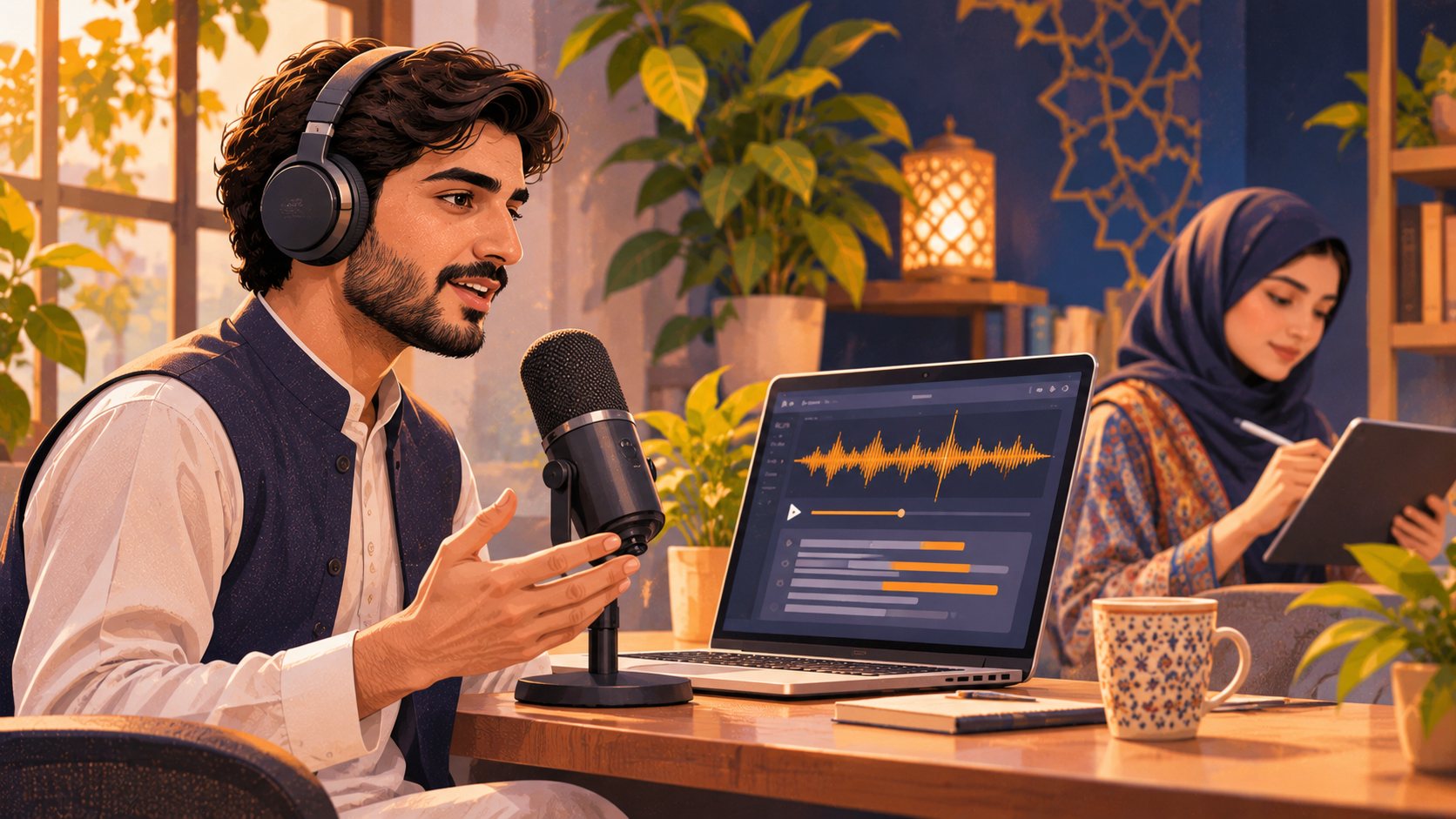
Why companies need recordings of Pakistani voices
Speech-recognition systems learn from examples. If a system has heard mostly American or British English, it struggles with a farmer in Multan speaking Saraiki, or with Urdu mixed with English words the way most Pakistanis actually talk. To fix that, AI teams need large sets of recordings that are:
- Real — spoken by real people, not generated by software.
- Diverse — different regions, ages, genders and accents.
- Clean — little background noise, the right sentence, complete audio.
- Consented — every speaker agreed in writing to how the recording will be used.
The types of voice tasks
| Task | What you do | Typical length |
|---|---|---|
| Read a sentence | Read a short sentence shown on screen, exactly as written | 2–10 seconds |
| Answer a question | Speak naturally in your own words about an everyday topic | 15–120 seconds |
| Review / transcribe | Listen to other recordings and check or type what was said (usually for experienced native speakers) | Varies |
How one task moves from your phone to payment
On Kaarkun, the phone first checks the recording for noise, clipping and length before it is sent. The server then checks it again — including speech-to-text and duplicate detection — and finally a human reviewer listens. The first recordings from every new contributor are reviewed by two different people. Only approved recordings are added to your earnings.
What it pays — honestly
Voice work is real, paid work, but it is task-based, not a salary. Rates depend on the project. On Kaarkun the rate for each task is shown before you start: currently Rs 10 for an approved short sentence and Rs 30 for an approved 15–120 second answer. New contributors start with a few trial tasks; more tasks open after those are approved. Payouts go to a JazzCash, Easypaisa or bank account in your own name after a one-time identity check.
Tips for getting recordings approved
- Record in the quietest room you have — fans, TV and traffic are the biggest problem.
- Hold the phone about a hand-width from your mouth.
- Read the sentence exactly as written; for answers, keep talking naturally for at least 15 seconds.
- Speak in your normal voice and accent — that is exactly what is needed.
- Never use voice-changing apps or replay old recordings; they are detected and rejected.

Your rights as a contributor
Before you record anything, a trustworthy platform should tell you clearly how recordings will be used, who they may be licensed to, how your personal data is protected, and how to withdraw consent. On Kaarkun, voice cloning is never allowed without separate consent, and withdrawing consent deletes recordings that have not yet been delivered.
Register free (Urdu) · See group opportunities · How we keep you safe
Frequently asked questions
Is voice data work real?
Yes. Speech-recognition and voice-assistant systems need recordings of real people speaking real languages and accents. Companies pay for consented, quality-checked recordings, and some of that work is done by contributors recording on their phones.
How much does voice recording work pay in Pakistan?
It depends on the project and the task. On Kaarkun, the current rate is shown before you start each task — for example Rs 10 for an approved short sentence and Rs 30 for an approved 15–120 second answer. Pay is for approved recordings only.
Do I need special equipment?
No. A smartphone and a quiet room are enough. A cheap wired earphone mic can help but is not required. Background noise is the most common reason recordings are rejected.
Why would a recording be rejected?
Common reasons: background noise, silence, reading a different sentence, clipping (too loud), using a recording or voice-changing software, or uploading the same audio twice. A good platform tells you the reason and lets you try again.
Will my voice be used for anything I did not agree to?
It should not. A trustworthy platform asks for clear consent before you record, explains how recordings are used and licensed, lets you withdraw consent, and never uses your voice for cloning unless you separately agree.